Ant Eating Watermelon Single Stitch Review
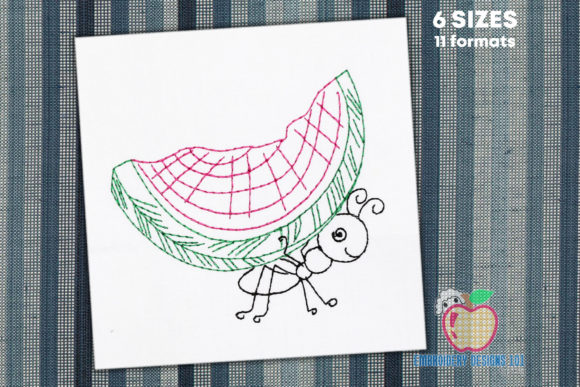
As an experienced embroidery designer who has spent years refining digital files for commercial production, I often evaluate new assets before recommending them to small business owners and apparel decorators. Today, I am reviewing the Ant Eating Watermelon Single Stitch, a design that falls under the Bugs category and is specifically formatted as a machine embroidery design. When you first encounter this file, described as a fun and easy-to-stitch running line art piece available in multiple sizes, it immediately signals versatility. For boutique owners, Etsy sellers, and crafters looking to elevate their small business merch, this design offers a playful yet professional aesthetic that can transform standard items into memorable branded products.
First Impressions: A Playful Brand Asset
The initial feeling of the Ant Eating Watermelon Single Stitch design is one of approachable charm. Unlike heavy, dense fill designs that can feel stiff or industrial, this running line art style suggests a handmade, rustic, or modern minimalist vibe. It strikes a balance between being decorative and functional. For a brand identity that wants to convey creativity, nature, or a touch of whimsy without sacrificing professionalism, this file is an excellent candidate. The simplicity of the single stitch outline ensures that the design remains legible even when scaled down, which is a critical factor for embroidered patch applications where detail can easily get lost.
When visualizing this on a product, the design feels like a perfect accent rather than an overpowering statement. It works exceptionally well for businesses that want to maintain a clean look while adding a unique personality trait. Whether applied to a soft cotton tote bag or a sturdy canvas apron, the Ant Eating Watermelon Single Stitch maintains its integrity, suggesting a high-quality finished product that customers will appreciate.
Real-World Business Applications
In my experience working with various clients, from local bakeries to creative studios, the utility of a design like this extends far beyond simple decoration. Let us consider a scenario where a small café or a handmade soap shop needs to create a cohesive line of merchandise. The Ant Eating Watermelon Single Stitch could serve as a charming chest logo accent on staff uniforms, instantly communicating a friendly and nature-loving culture to employees and customers alike.
- Custom Apparel: On work shirts or chef coats, this design acts as a subtle branding element that does not distract from the primary function of the garment.
- Cap Embroidery: The running line style translates beautifully to cap fronts, offering a clean look that sits comfortably on curved surfaces without excessive bulk.
- Tote Bag Design: For event merch or customer gifts, placing this design on a tote bag creates a practical item that people actually want to carry, effectively turning every outing into a mobile advertisement.
- Apron Embroidery: In a bakery or florist setting, this design adds a delightful touch to kitchen linens, reinforcing the artisanal quality of the handmade product.
Furthermore, for digital creators selling digital embroidery files, this asset serves as a versatile tool. It can be used in printable mockups to showcase how a client's brand would look on physical goods before production begins. This capability helps in securing client approval and reducing the risk of errors in the final commercial embroidery project.
Strategic Considerations and Limitations
While the Ant Eating Watermelon Single Stitch is highly adaptable, a professional must exercise caution in specific scenarios. Running line designs rely heavily on spacing and thread color contrast to remain visible. If placed on a dark uniform without proper underlay or contrasting thread colors, the design may disappear into the fabric texture. Similarly, on textured fabrics like heavy denim or bouclé, the fine lines of the ant and watermelon might not register clearly.
Another critical area to monitor is stitch density and size. While the description notes the design comes in multiple sizes, using it for very small patches requires careful evaluation. At tiny dimensions, the delicate outlines of the ant legs or the watermelon seeds could merge together, resulting in a muddy appearance. Additionally, items that require frequent washing, such as daily wear uniforms, need to be tested for durability. While single stitch designs are generally durable, tight stitching on high-friction areas like cap brims or sleeve cuffs should be reviewed to ensure the thread holds up over time.
Impact on Brand Identity and Customer Trust
The choice of embroidery design directly influences brand identity. A well-executed Ant Eating Watermelon Single Stitch projects an image of attention to detail and creativity. It tells the customer that the business cares about aesthetics and quality. In contrast, a poorly digitized or low-density version can undermine customer trust and make the finished product appear cheap. By selecting a design that balances playfulness with precision, businesses can enhance product value and foster stronger buyer engagement. Consistency in these visual elements across all design assets is key to building a recognizable and professional brand presence.
Practical Designer Notes for Production
Before committing to a full production run, any serious embroiderer should follow a rigorous testing protocol. First, always test the Ant Eating Watermelon Single Stitch in black and white to verify the structural integrity of the running lines. This helps identify any potential gaps or weak points in the digitization that might not be obvious with colored threads.
Next, inspect the spacing and confirm the appropriate hoop size for your intended application. Ensure you use the correct stabilizer to prevent puckering, especially on lightweight fabrics commonly used for tote bag design or apron embroidery. Testing on real fabric is non-negotiable; screen mockups do not capture the tactile reality of thread on cloth. Create a printable mockup for client approval to manage expectations, but remember that the actual embroidery file behavior may vary slightly based on the machine and material combination.
Finally, review the thread color contrast carefully. The effectiveness of this running line art depends entirely on the visibility of the outline against the background. Compare the design beside other design assets in your collection to ensure visual consistency. Most importantly, confirm the commercial licensing terms before using this machine embroidery design for resale or large-scale custom apparel projects. Always check the specific file details regarding stitch count and format compatibility to avoid production delays.
By treating the Ant Eating Watermelon Single Stitch as a strategic business tool rather than just a decorative element, small business owners can leverage its unique charm to build a loyal customer base. With proper planning and execution, this design can become a signature element of your brand, enhancing everything from staff uniforms to customer-facing merchandise.